Assessing the Effectiveness of International Law in Prosecuting Heads of State: The Case of Omar al-Bashir

By Grace Zurbrügg
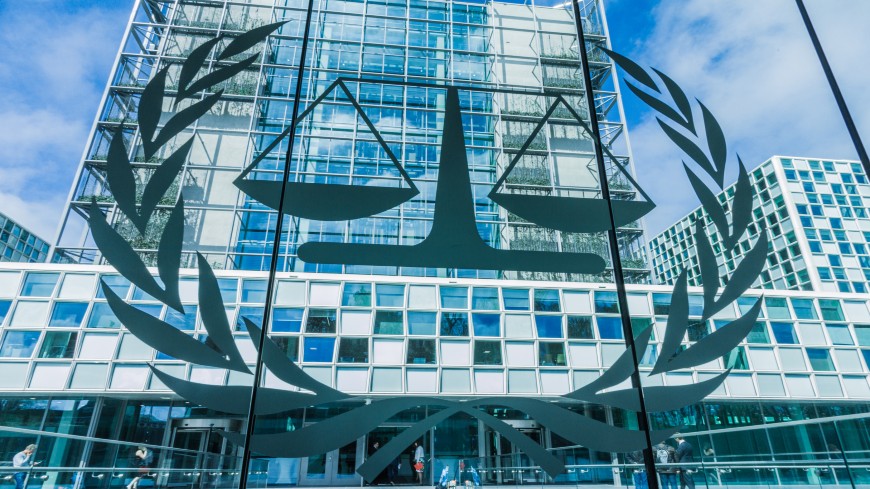
Established in 2002, the International Criminal Court (ICC), was created to bring perpetrators of genocide, war crimes, and crimes against humanity to justice. On March 4, 2009, the ICC made history by issuing its first arrest warrant against a sitting head of state. Sudanese President Omar al-Bashir was charged with war crimes and crimes against humanity for atrocities committed during the Darfur conflict. In 2010, these charges were extended to include genocide as well. Despite the severity of the allegations, al-Bashir remained in power until his ousting in 2019. Even more strikingly, he travelled internationally, including to ICC member states, without facing arrest. This raises a crucial question: How effective is the ICC in holding heads of state accountable for their crimes?
The arrest warrant for al-Bashir intended to send a strong message: no one is above the law. However, it also exposed the ICC’s significant limitations. Although Sudan is not a party to the Rome Statute, the United Nations Security Council referred the Darfur situation to the ICC in 2005, granting the court jurisdiction. Nevertheless, the warrant went unenforced, revealing systemic challenges in executing international justice. The ICC lacks the authority to enforce its decisions independently and must rely on member states for cooperation. Such dependency was particularly evident in al-Bashir’s case. Countries such as South Africa and Jordan, both ICC member states, hosted al-Bashir during his presidency but refused to arrest him. Their justifications included legal and political considerations, such as claims that al-Bashir was entitled to immunity as a sitting head of state and obligations to the African Union (AU).
The AU, for instance, has adopted resolutions calling for non-cooperation with the ICC regarding al-Bashir’s arrest, arguing that his indictment could undermine peace efforts in Sudan. Additionally, the AU has long expressed concerns over the ICC’s perceived bias against African leaders, viewing its actions as a challenge to the continent's sovereignty. This reflects a broader pattern where regional political considerations, including commitments to AU unity and stability, sometimes outweigh international legal commitments.
International law distinguishes between two types of immunity for heads of state: functional immunity, which covers official acts, and personal immunity, which shields leaders from legal action during their tenure. Personal immunity has been traditionally regarded as almost absolute, even in cases involving serious crimes. However, Article 27 of the Rome Statute explicitly removes immunity for sitting heads of state in ICC proceedings. This provision undermines the conventional practices of many states which adhere to the precedent of personal immunity. The Pinochet case in Chile illustrates how national courts can successfully navigate similar immunity issues, offering an alternative path to accountability. In 1998, former Chilean dictator Augusto Pinochet was arrested in the United Kingdom following a Spanish extradition request for human rights violations. The House of Lords ruled that Pinochet did not have immunity for acts of torture, setting a precedent that national courts could override claims of personal immunity in cases involving international crimes. South Africa’s refusal to arrest al-Bashir during the 2015 African Union summit exemplifies this legal conflict. While South Africa’s Constitutional Court later ruled that its government’s actions were unlawful, the decision was largely symbolic and failed to advance al-Bashir’s prosecution.
The African Union has been a vocal critic of the ICC, accusing it of disproportionately targeting African leaders while neglecting crimes committed elsewhere. The al-Bashir case became a focal point in this debate. The AU consistently urged its member states to defy the ICC’s arrest warrant, framing the prosecution as an affront to African sovereignty. Many African leaders argue that the ICC’s focus on the continent undermines its credibility. Such criticism is not unfounded as most ICC cases involve African nations. Meanwhile, cases outside Africa, such as those in Syria or Myanmar, remain unaddressed. This perception of bias has eroded the ICC’s legitimacy in Africa, hindering cooperation with its mandates.
The case of Omar al-Bashir is a litmus test for the effectiveness of international criminal law. While it demonstrates the potential for accountability, it also exposes substantial limitations within the existing system, including its reliance on political will and its lack of enforcement mechanisms. Although al-Bashir remains in Sudanese custody and discussions about his extradition to the ICC continue, broader issues remain unresolved. To strengthen international justice, the ICC must address its shortcomings in enforcement, engage with critics, and expand its jurisdictional reach. Without such reforms, the fight against impunity will remain a symbolic effort rather than an effective mechanism for justice.
Continue reading the current issue
Return to the OULPR launch article and issue one context.
Introducing the Oxford University Law & Policy Review
Welcome to the Oxford Undergraduate Law & Policy Review — the Oxford Law Society’s new platform for undergraduate legal scholarship. Founded in Trinity Term 2025, the Review was created to provide a space for law students to develop and publish thoughtful, original legal and policy analysis beyond the limits of the undergraduate syllabus. Having ...Oxford Law Society editorialThe OULPR Blog
Rolling articles, case notes, and commentary from Oxford student writers.
Hexagon v Providence: An exercise in ordinary construction
Finley Hewitt examines the Supreme Court's construction of the termination clause in Hexagon Housing Association Limited v Providence Building Services Limited [2026] UKSC 1.By Finley HewittMore from the archive
Keep reading across recent OULPR and Oxford Law Society pieces.
An Interview with John Vater KC, Children Law Specialist at Harcourt Chambers
Introduction John Vater KC is a leading children law specialist at Harcourt Chambers, with extensive experience appearing at all levels of court, including the Supreme Court. His practice focuses on complex child protection cases, including those involving serious physical harm, brain injury, and expert medical evidence. In this interview, he ...By Maxim Kasolowsky